How to Keep a Polished Concrete Floor Looking Sharp
The floor is low-maintenance, not no-maintenance. A few simple habits are the difference between it looking new in year one and year ten.
September 3, 2026 · 2 min read
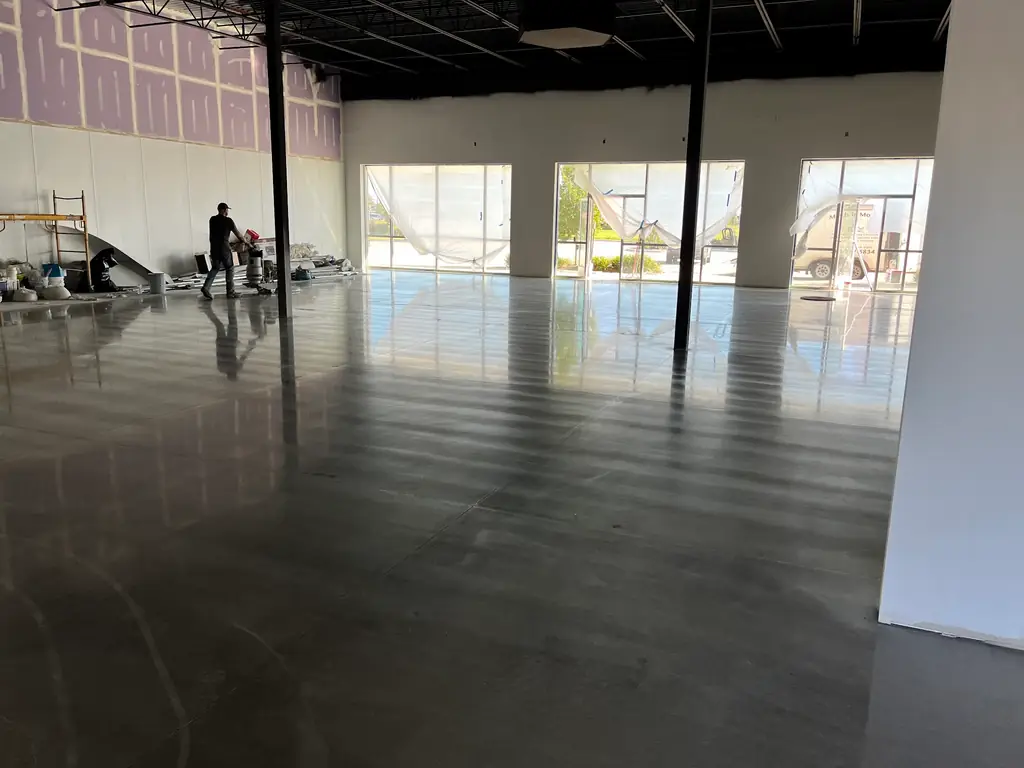
One of the reasons people choose polished concrete is that it's genuinely low-maintenance compared to almost anything else you could put down, no grout lines, no carpet fibers, no wax buildup to strip. But low-maintenance isn't the same as no-maintenance, and the habits that protect the sheen are simple enough that most clients fold them into their normal cleaning routine without thinking about it after the first month or two.
Sweep and dust more than you'd think
Grit is the biggest enemy of a polished floor's shine. Small particles of sand or dirt tracked in on shoes act like fine sandpaper under foot traffic and wheeled furniture, and over time that dulls the gloss faster than almost anything else. A regular dust mop or soft-bristle sweep, especially at entry points, does more for the long-term finish than any cleaning product.
Clean with the right products, not just whatever's under the sink
Harsh acidic cleaners, vinegar-based solutions, and abrasive scrub pads can etch or dull a polished and sealed surface over time. A neutral pH cleaner designed for polished concrete or sealed floors is the safer bet for routine mopping. It's a small thing, but it matters more on this floor than on a lot of other surfaces because the shine you're protecting is the seal itself, not a separate wax coat you can just reapply.
Wipe up spills, especially anything acidic
The densifier and seal applied during the polishing process make the floor resistant to staining, but resistant isn't the same as immune. Wine, coffee, citrus, and other acidic spills should get wiped up in reasonable time rather than left to sit for hours, particularly in the first weeks after a new install while the surface is settling in.
Protect it from heavy or sharp point loads
- Use felt pads under furniture legs to prevent scratching when things get moved
- Avoid dragging heavy equipment or appliances across the surface without protection underneath
- In a commercial or shop setting, use floor mats at entrances and under rolling equipment where wear concentrates
Plan for a resealing cycle
The seal that protects a polished floor wears gradually with foot traffic and cleaning over the years, especially in high-traffic commercial spaces. Periodic resealing, well spaced out rather than an annual chore, keeps the protection and the shine where they were on day one. This is worth checking on rather than guessing at, since the right interval depends on how much traffic the specific floor sees.
Clients tell us that once a polished floor is in, it becomes the easiest surface in the house or building to keep looking good, and that's really the point of the whole process. If a floor we installed anywhere around Houston or Katy is starting to look tired, or you're not sure whether it needs resealing yet, give Kelley a call and he can tell you what it actually needs.
Mimcon LLC — (281) 787-5834
Call (281) 787-5834More articles
Polished Concrete or Epoxy? How to Choose the Right Floor
Mimcon installs both, so here's an honest, no-sales-pitch look at what each one is actually good for.
What Actually Happens During a Polished Concrete Job
From the first grind to the final seal, here's what the process really looks like and what it means for living in the house that week.