Polished Concrete or Epoxy? How to Choose the Right Floor
Mimcon installs both, so here's an honest, no-sales-pitch look at what each one is actually good for.
September 3, 2026 · 3 min read
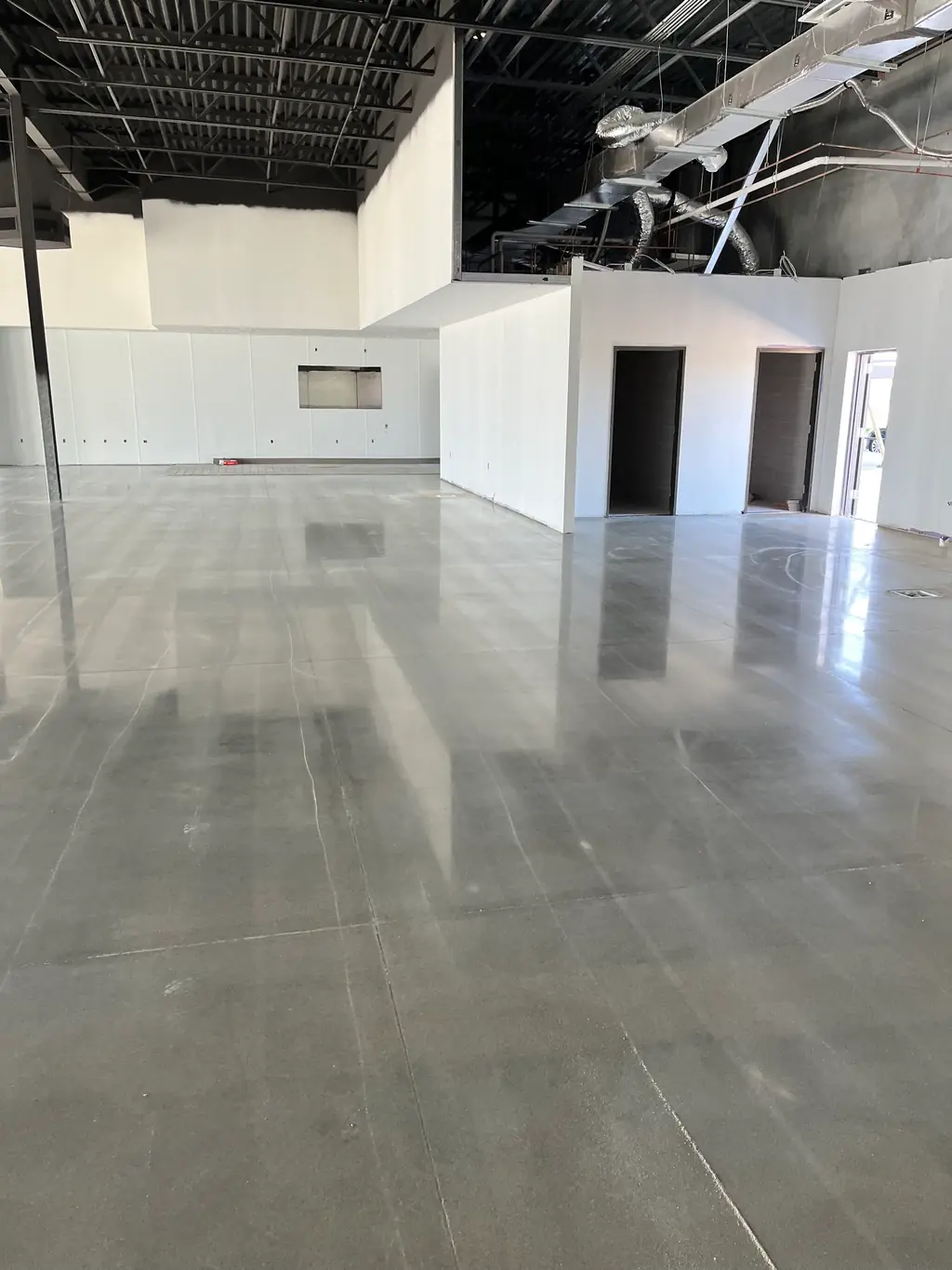
We get this question more than any other, and the honest answer is that neither floor is better. They're different things doing different jobs, and which one you want depends on your slab, your space, and what you're going to do on top of it. We install both, so there's no reason for us to steer you toward one over the other. Here's how we actually think about it when we're standing in your garage or living room.
They aren't the same kind of floor
Polished concrete is your existing slab, ground down in stages with diamond tooling until it's smooth, then chemically densified and sealed. There's no coating sitting on top. The floor you're walking on is the concrete itself, just refined. Epoxy is different. It's a resin system, usually two parts mixed together, that gets rolled or troweled onto the slab and cures into its own hard, glassy surface. It bonds tightly to the concrete underneath, but it's a separate layer, not the slab itself.
That difference sounds small, but it drives almost everything else about how each floor behaves.
Durability holds up differently
Because polished concrete is the slab, there's nothing to peel, chip, or delaminate. Drop a wrench on it, roll a loaded pallet jack across it, park a car on it every day for twenty years, and it just wears in slightly rather than failing. Epoxy is genuinely tough too, resistant to chemicals, stains, and abrasion, and it holds up well under normal foot and vehicle traffic. But it's a coating, and coatings can chip at an impact point or lift at an edge if moisture gets underneath them. For a busy commercial floor or a residential space, that's rarely a real problem. For a heavy-use shop floor, it's worth knowing about.
Moisture matters more than people think
Houston sits on clay soil, and humidity here is no joke. Slabs move a little with the ground and can carry moisture vapor up through them, especially slabs that were poured directly on grade without a good vapor barrier. That matters a lot more for epoxy than for polished concrete. A coating sitting on a damp slab can bubble, haze, or lose adhesion over time, which is why we always want to check moisture conditions before we commit to an epoxy install. Polished concrete doesn't have that failure mode in the same way, since there's no film to trap vapor underneath. If your slab has a history of dampness, that's a real factor in the decision, not just a formality.
The look you actually want
Polished concrete has a natural, honest look. You can polish it to a satin sheen or a full mirror finish, and if the mix has decent aggregate in it, you can grind deeper to expose the stone for a warmer, more textured look. What you see is what's really in the slab. Epoxy is closer to paint in terms of options. Solid colors, color flake systems, metallic swirls, even custom patterns, all bonded to a glossy, seamless surface. One recent client told us they were nervous going in but that we walked them through the style and finish choices and the result completely changed how the space felt. That's the kind of decision epoxy opens up that polished concrete doesn't, because you're not limited to what's already in the concrete.
Where each one tends to fit
- Garages, workshops, and industrial floors that see chemicals, oil, or heavy impact often do well with epoxy
- Homes, showrooms, retail spaces, and offices where you want a warm, permanent-feeling floor tend to lean toward polished concrete
- A slab with a moisture history is worth testing before an epoxy install
- Commercial and residential jobs work for either system, it comes down to the specific space
We've been doing this work around Houston and Katy since 1998, on both residential floors and commercial construction sites, and the short version is that we won't recommend a system just because it's the one we happened to install last. Give Kelley a call and he'll look at your actual slab before telling you which way to go.
Mimcon LLC — (281) 787-5834
Call (281) 787-5834More articles
What Actually Happens During a Polished Concrete Job
From the first grind to the final seal, here's what the process really looks like and what it means for living in the house that week.
Ripping Out Old Tile or Carpet? Your Slab Might Already Be the Floor
Before you plan a full tear-out and new flooring, it's worth finding out what's actually underneath what you've got.