Epoxy Flooring for a Houston Garage or Workshop: What Actually Matters
The climate here does things to a garage slab that don't come up in national flooring guides written for a different part of the country.
September 3, 2026 · 2 min read
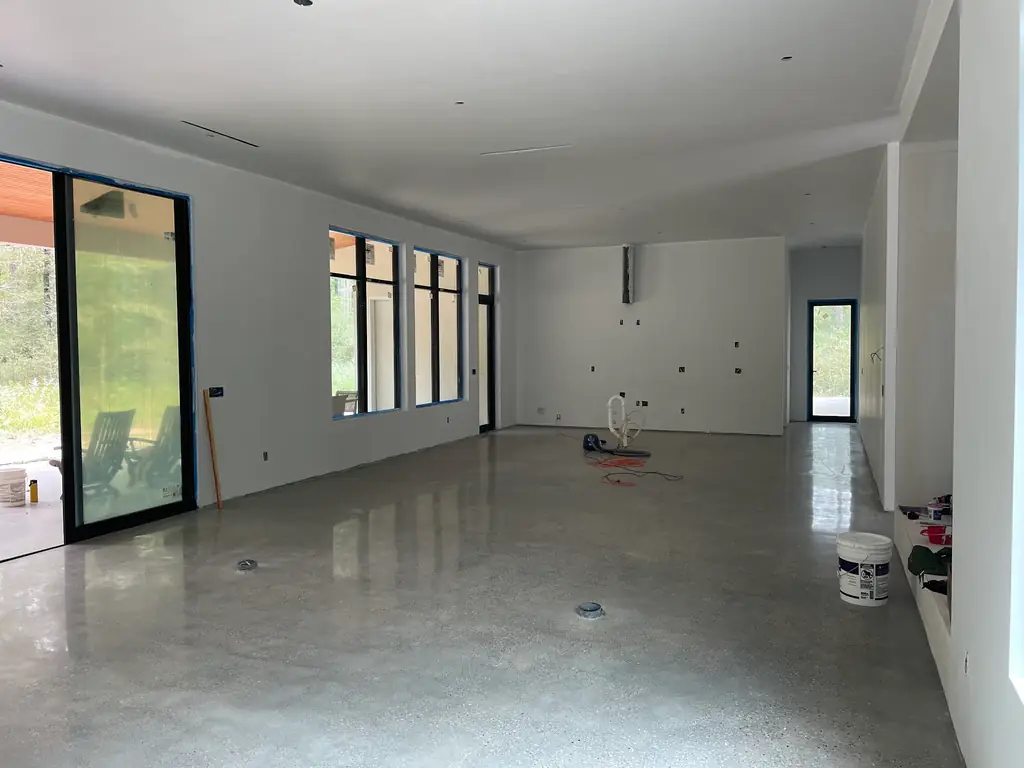
Epoxy is a great fit for a garage or workshop floor. It shrugs off oil, brake fluid, and shop chemicals, it's easy to hose down, and it looks a lot better than bare gray concrete. But a Houston garage isn't a lab-controlled environment, and the local climate genuinely changes how an epoxy job needs to be handled compared to a drier, cooler part of the country.
Slab moisture is the first thing we check
Garage slabs are usually poured directly on grade, often without much of a vapor barrier underneath, and Houston's clay soil holds and moves moisture more than sandier soils do. That means moisture can migrate up through the slab from below, even when the surface looks bone dry. Epoxy is a coating bonded on top of the concrete, and if there's persistent moisture vapor coming up from underneath, it can get trapped between the slab and the coating. Over time that shows up as bubbling, hazing, or the coating losing its bond in spots. It's not a guaranteed problem, but it's real enough that we check moisture conditions before committing to a system, rather than assuming a garage slab is dry just because it hasn't rained recently.
Heat changes the installation window, not just the finished floor
Epoxy cures through a chemical reaction, and that reaction is sensitive to temperature and humidity while it's happening. A garage that sits at high heat and high humidity for most of the summer isn't automatically a bad candidate, but it does mean the install has to be timed and handled correctly, not just poured and left to figure itself out. This is one of the reasons an experienced crew matters more with epoxy than with a lot of other floor finishes. We've worked through Houston summers on plenty of jobs, including stretches well past 100 degrees, and know how that heat affects the process from prep to cure.
What holds up well once it's installed
- Chemical and stain resistance against oil, coolant, and shop fluids
- Abrasion resistance under rolling tool chests, jack stands, and foot traffic
- A seamless surface that's genuinely easy to clean, no grout lines or seams collecting grime
- Color and flake options that hide minor scuffs better than a solid, plain finish
When polished concrete might be the better call instead
If moisture testing shows real vapor coming up through a garage slab, or if the space is going to see genuinely heavy, sustained impact from equipment, polished concrete is sometimes the more durable long-term choice, since there's no coating that can lift or bubble. We install both, so we're not trying to sell you into epoxy if your slab and your use case point somewhere else. The honest answer usually only comes from actually testing the slab, not from a general rule of thumb.
If you're planning a garage or workshop upgrade anywhere around Houston or Katy, Kelley can take a look at the slab, check what the moisture situation actually is, and give you a straight recommendation on epoxy versus polished concrete before any work starts.
Mimcon LLC — (281) 787-5834
Call (281) 787-5834More articles
Polished Concrete or Epoxy? How to Choose the Right Floor
Mimcon installs both, so here's an honest, no-sales-pitch look at what each one is actually good for.
What Actually Happens During a Polished Concrete Job
From the first grind to the final seal, here's what the process really looks like and what it means for living in the house that week.